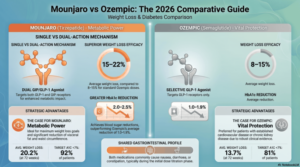
With the introduction of innovative medical treatments, patients now have access to highly effective options for managing obesity and type 2 diabetes. The most popular are semaglutide (Ozempic/Wegovy) and tirzepatide (Mounjaro/Zepbound), which were initially developed for type 2 diabetes but are now also widely used for weight management.
These drugs are well-known because they use the ‘incretin effect’, a natural process where your gut sends signals to your brain indicating that you’re full. Instead of relying solely on willpower, these medications change how your body processes hunger and blood sugar.
For a long time, diabetes treatments often caused people to gain weight. Since carrying extra weight can make diabetes worse by increasing insulin resistance. These new drugs break that cycle and give a new hope with weight loss while supporting better blood sugar control.
However, let’s examine their safety and see which option may be most suitable for you.
How Mounjaro and Ozempic Work in the Body
While both drugs belong to the GLP-1 receptor agonist family, they possess distinct pharmacological profiles and effectiveness patterns. So, patients and healthcare providers must compare them carefully.
To appreciate the benefits and differences between these drugs, it’s important to understand how they interact with the body. Both medications act on receptors in the gastrointestinal tract, brain, and pancreas, helping regulate appetite, slow gastric emptying, and increase feelings of fullness after meals.
Ozempic (Semaglutide): GLP-1 Mechanism
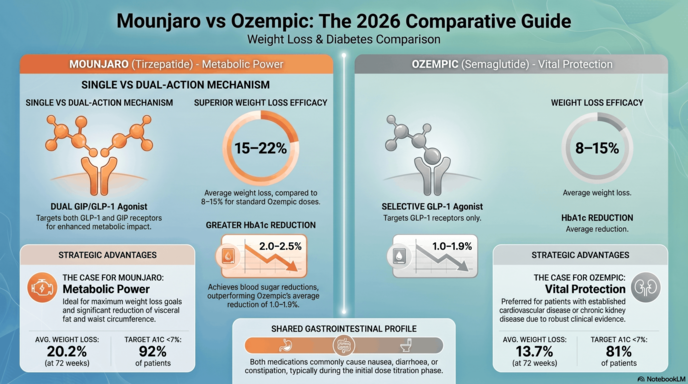
Ozempic is a selective GLP-1 receptor agonist. By acting as a naturally occurring hormone, it stimulates insulin release, suppresses inappropriate glucagon secretion, and slows gastric emptying. These actions help the brain recognize fullness, supporting lower calorie intake and weight loss over time.
Mounjaro (Tirzepatide): Dual Hormone Action
Mounjaro is a first-of-its-kind dual agonist, targeting both GLP-1 and GIP receptors. The addition of GIP helps improve insulin sensitivity, fat metabolism, and may reduce certain gastrointestinal side effects associated with GLP-1-only drugs. This Mounjaro’s dual approach helps produce stronger effects on energy utilization and fat storage, which results in both weight loss and metabolic control.
Comparing the Key Differences
Here is a quick comparison between Mounjaro and Ozempic.
| Metric | Mounjaro (Tirzepatide) | Ozempic (Semaglutide) |
|---|---|---|
| Drug Class | Dual GIP/GLP-1 Agonist | GLP-1 Agonist |
| Max Weekly Dose | 15 mg | 2 mg |
| Starting Dosage | 2.5 mg weekly | 0.25 mg weekly |
| Main Approval | Type 2 Diabetes | Type 2 Diabetes & Heart Health |
| Retail Cost (Avg) | ~$1,069/month | ~$935/month |
The Impact of High-Dose Semaglutide
As treatment options keep advancing, newer high-dose formulations are further changing the comparison.
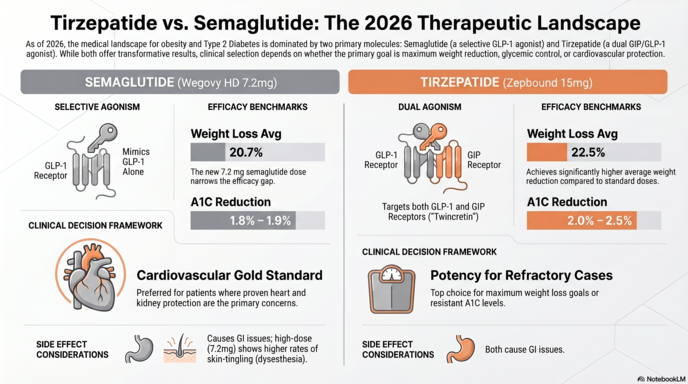
The FDA-approved Wegovy HD 7.2 mg was introduced in early 2026 to help patients who plateau on lower doses. The STEP UP trial demonstrated an average weight reduction of 20.7%, effectively matching maximum-dose Mounjaro results. This narrowing gap provides patients with more choices depending on tolerance, cost, and access.
How Mounjaro and Ozempic Compare for Weight Loss and Diabetes Control
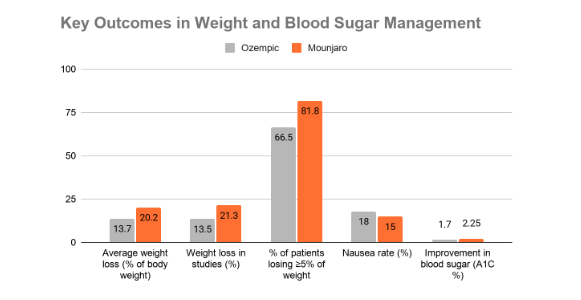
Due to its dual hormone mechanism, Mounjaro often produces greater weight loss than Ozempic. In the SURMOUNT-5 trial, participants on maximum-dose tirzepatide lost an average of 20.2% of their body weight (approx. 50.3 lbs), while those on semaglutide 2.4 mg (Wegovy) achieved 13.7% (approx. 33.1 lbs).
Blood Sugar Control and Metabolic Benefits of Mounjaro vs Ozempic
Although they aid in weight loss, the primary goal of these drugs is the management of type 2 diabetes.
- A1C Reductions: Mounjaro users achieved 2.0 – 2.5% drops, while Ozempic users saw 1.86 – 1.9% reductions.
- Diabetes “Reversal”: About 51% of patients on high-dose Mounjaro reached an A1C below 5.7%, which is in the non-diabetic range.
- Visceral Fat Reduction: Mounjaro demonstrates a stronger effect on waist circumference and “hidden” fat compared to GLP-1-only drugs.
Safety Profile and Side Effects of Mounjaro and Ozempic
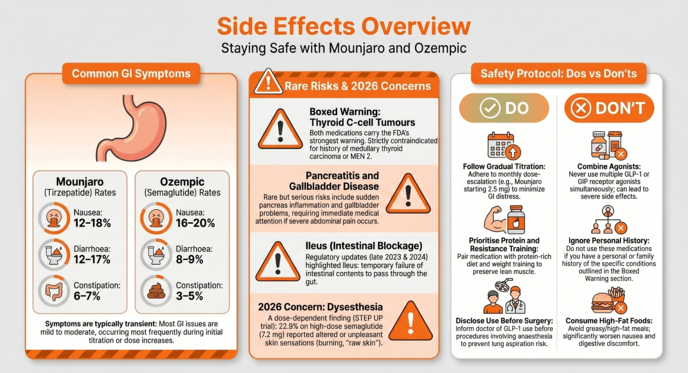
Both medications are generally well-tolerated, but side effects mostly affect the gastrointestinal system.
Common Side Effects
- Ozempic: Slightly higher rate of persistent nausea.
- Mounjaro: Slightly higher rates of diarrhea and constipation at maximum doses.
New 2026 Finding: Dysesthesia
In the STEP UP trial of higher-dose Wegovy, some participants reported unusual sensory side effects like tingling or burning sensations. These effects were uncommon at lower doses.
Serious Risks
- Both drugs carry a boxed warning for thyroid C-cell tumors.
- Not recommended for patients with medullary thyroid carcinoma or MEN2 syndrome.
- Rare complications: pancreatitis, gallbladder disease, and acute kidney injury.
How Celebrities Experienced Using Mounjaro and Ozempic
The notable effects of these drugs have attracted significant media and celebrity attention. People often talk about ‘Ozempic Face,’ which refers to the loss of facial fat that can happen after rapid weight loss.
Beyond headlines, several celebrities have openly shared their personal experiences with these medications, discussing both their benefits and challenges.
- Amy Schumer: American actress and comedian Amy Schumer has been open about her experience with Ozempic and its side effects. During an appearance on Watch What Happens Live with Andy Cohen, she said, “I was one of the people that felt sick, I couldn’t play with my son” (The Standard, Rachel McGrath and Nuray Bulbul, 31 January 2025).
On the same show, she criticized the lack of honesty around celebrity weight-loss methods, stating, “Everyone has been lying saying, ‘Oh smaller portions” (CNN, June 10, 2023). She also commented on the growing use of such drugs, adding, “Everyone and their mom is gonna try it” (Nadrich Accident Injury Lawyers, Jeffrey Nadrich, updated September 17, 2025).
- Kathy Bates: Award-winning actress Kathy Bates told People magazine (Brianne Tracy, October 9, 2024) that her weight loss combined lifestyle changes with medication. Addressing speculation, she said, “There’s been a lot of talk that I just was able to do this because of Ozempic.”
She emphasized the effort behind her transformation, adding, “But I have to impress upon people out there that this was hard work for me, especially during the pandemic.” She also reflected, “I ate because I was afraid, and I ate because it was a FU to my self-esteem.” Bates noted that most of her weight loss came from diet and lifestyle changes, with about 20 pounds later supported by Ozempic.
- Rebel Wilson: Australian actress Rebel Wilson shared in an exclusive interview with The Sunday Times (Megan Agnew) that her weight loss involved major lifestyle changes, including intense daily exercise. She said she increased her workouts to “two and a half hours each day,” including flipping tyres and running stairs.
She also revealed she briefly used Ozempic after reaching her goal weight, saying, “Someone like me could have a bottomless appetite for sweets, so I think those drugs can be good,” though she confirmed she is no longer taking it.
How Much Do Mounjaro and Ozempic Cost? Insurance and Medicare Coverage
Beyond effectiveness, the cost and insurance coverage of Mounjaro and Ozempic may affect which option is more practical for you.
- Monthly Cost: Often exceeds $1,000 without insurance.
- Manufacturer Savings: Eligible patients may pay as little as $25–$100 per month.
- Medicare GLP-1 Bridge (2026): Temporary coverage for Part D beneficiaries with BMI ≥35 and other criteria, $50 monthly copay.
Which Is Better: Mounjaro vs Ozempic for Weight Loss?
When choosing between Mounjaro and Ozempic, it depends on your health priorities. For example:
| Decision Factor | Mounjaro (Tirzepatide) | Ozempic (Semaglutide/Wegovy) |
|---|---|---|
| Primary Goal | Maximum weight loss (20%+ of total body weight) | Cardiovascular and kidney protection |
| Diabetes Control | Resistant or difficult-to-control diabetes | Standard diabetes management |
| Fat Reduction | Better reduction of visceral fat and waist circumference | Moderate fat reduction |
| Additional Benefits | — | Pen stability for travel (56 days vs. 21 days for Mounjaro) |
The Verdict
Among Mounjaro and Ozempic, Mounjaro has shown greater average weight loss in clinical trials and stronger improvements in blood sugar control. However, Ozempic plays an important role in cardiovascular and kidney protection. Both medications offer effective long-term options for managing chronic conditions such as obesity and type 2 diabetes.
Frequently Asked Questions
Ozempic is approved for type 2 diabetes. Using it for weight loss is off-label. The approved weight-loss version is Wegovy.
Mounjaro is approved for type 2 diabetes. The weight-loss version is Zepbound.
Mounjaro usually works faster for weight loss. Both start reducing appetite in a few weeks.
Ozempic is usually cheaper, but prices depend on insurance and location.
No. You should not take both together. It can increase side effects.
Disclaimer: This blog is for informational purposes only and does not replace professional medical advice. Always consult a healthcare provider before starting any prescription medication.